
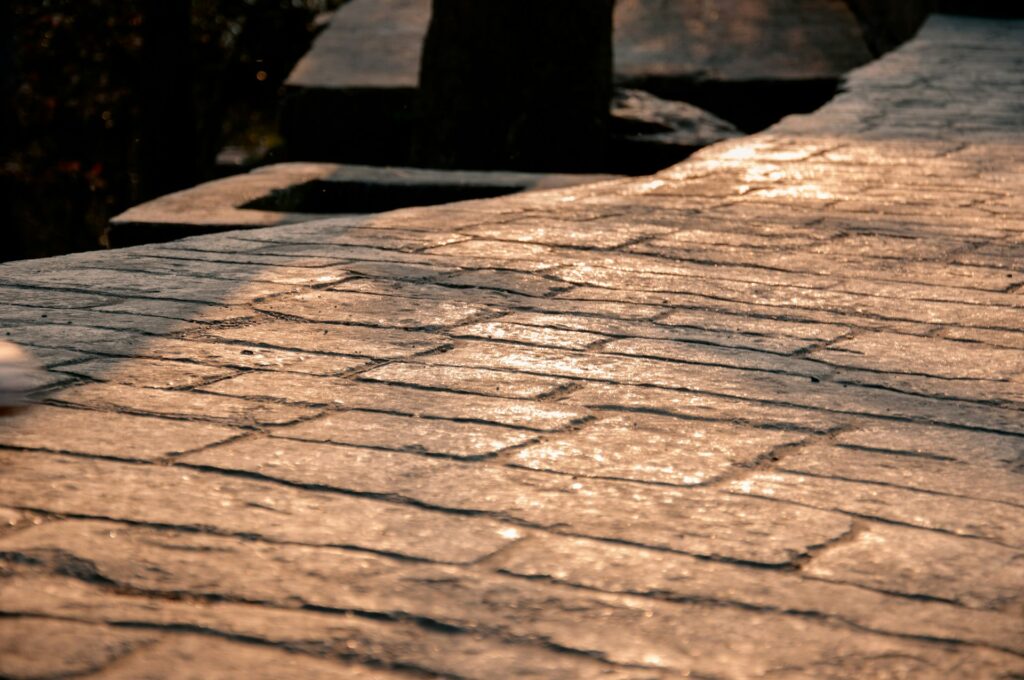
A stamped concrete driveway is usually the first thing that catches someone’s eye when they pull into a property, and that’s not an accident. The front of your home sets the tone for everything behind it, and flat gray concrete, while functional, rarely does much to sell the view.
Decorative finishes change that math completely. They take a surface most people walk over without thinking and turn it into something that adds character, value, and a bit of personality to the whole property.
Let’s talk about why decorative concrete has taken off, what your options actually look like up close, and how the finish you choose affects not just looks but how long the surface holds up.
Why Decorative Finishes Matter More Than People Think
Curb appeal isn’t just a real estate buzzword. It’s measurable. Homes with thoughtful exterior upgrades consistently sell faster and closer to asking price than identical homes with tired surfaces out front. The driveway is a huge part of that picture because it’s the largest single hardscape element on most properties.
Swap a plain slab for textured, colored, or patterned concrete and you’ve changed the entire feel of the home before anyone gets to the front door. A stamped concrete driveway signals care. It signals quality. And it does that without requiring a full landscape overhaul or a six-figure renovation budget.
There’s also the day-to-day part. You look at your driveway every time you leave and come home. A surface that actually looks good makes the house feel finished, not utilitarian. Many of the best concrete driveways installations lean into decorative finishes because homeowners realize the upgrade cost is small compared to how long they’ll enjoy it.
The Main Decorative Options
Decorative concrete isn’t one thing. It’s a category, and the options inside it each bring something different.
Stamped concrete is the most popular. Fresh concrete gets pressed with patterned mats to mimic brick, cobblestone, flagstone, slate, or even wood planks. The result looks remarkably close to the real material at a fraction of the cost. A well-done stamped concrete driveway can pass for natural stone at a glance, and it holds up far better than pavers that shift over time.
Stained concrete uses either acid-based or water-based stains to add color. Acid stains react chemically with the concrete and produce rich, variegated tones that look almost marbled. Water-based stains give you more color consistency and a broader palette. Either way, the color soaks into the surface rather than sitting on top, so it doesn’t peel or flake.
Colored concrete mixes pigment directly into the concrete before it’s poured. The color runs all the way through the slab, which means wear over the years doesn’t expose an uncolored layer underneath. It’s low maintenance and great for modern, minimalist looks.
Exposed aggregate washes the top layer of cement away to reveal the stones mixed into the concrete. You get a textured, natural-looking surface with excellent grip, which is useful on slopes or in climates with heavy rain.
Crews experienced in stamped concrete work generally handle all of these finishes because the underlying skills overlap. Knowing one well usually means knowing the rest.
Where the Value Actually Shows Up
Decorative finishes cost more upfront than a basic pour. No getting around that. A stamped concrete driveway typically runs eight to fifteen dollars per square foot more than plain concrete, depending on complexity. Stained or colored work lands somewhere in the middle. So why do homeowners keep choosing the upgrade?
First, longevity. A quality decorative finish holds up as long as the slab itself, which is thirty to forty years with basic care. You’re not paying for something that wears out in five.
Second, maintenance is basically the same as plain concrete. You seal it every few years, sweep it, and rinse it. That’s it. There’s no special upkeep tax for picking a finish that looks good.
Third, property value. Appraisers and buyers both notice quality hardscape. Crews offering decorative concrete work regularly see homeowners recoup a solid chunk of the upgrade cost at sale, plus the years of enjoyment before that point.
Matching Finish to Property Style
Not every decorative option fits every home. That’s worth thinking about before you pick a pattern off a catalog page.
Traditional homes, colonials, and craftsman styles tend to pair well with stamped brick or cobblestone patterns. The rough texture and classic shapes match the architecture without clashing.
Modern and contemporary homes usually look better with smoother finishes. Colored concrete in charcoal, slate, or warm gray tones complements clean lines. A stamped concrete driveway with a subtle slate pattern works, but avoid anything too busy.
Rustic or country properties look great with exposed aggregate or stamped flagstone. The organic texture fits the setting, and the colors blend with natural surroundings instead of fighting them.
Mediterranean or Spanish-style homes often pair with warm tan, terracotta, or sandstone tones. Stamped patterns that mimic tile or large-format stone reinforce the style.
The best way to pick is to look at your home from the street and ask what kind of surface would actually belong there. Good contractors, like those handling driveways patios in established neighborhoods, can usually tell you what works with your home’s style based on what they’ve seen hold up and look right over time.
What Can Go Wrong With Decorative Concrete
Decorative work is less forgiving than plain concrete. A sloppy pour on a gray slab is still a gray slab. A sloppy stamp job is a permanent eyesore. Patterns that don’t line up, color that goes blotchy, release agent left in the wrong places, or seams that don’t match all stay visible for the life of the driveway.
That’s why the crew matters. A stamped concrete driveway takes experience, the right tools, and enough people on site to work the pattern while the concrete is still workable. That window is short. Miss it and you’re living with the result.
Sealing is another area where shortcuts show. Decorative finishes need sealing to protect the color and texture, and that sealer needs refreshing every two to three years. Skip it and UV rays, water, and de-icing salts will fade and pit the surface faster than you’d expect.
Planning the Project
If you’re thinking about going decorative, here’s what helps. Get samples in hand before committing. Most contractors will show you sample boards or point you to completed projects nearby. Seeing the finish in real light and at full scale is different from a catalog photo.
Ask about the sealer schedule and what products the contractor uses. Penetrating sealers last longer and protect better than surface-only products. Also ask how they handle color consistency across a large slab, because that’s where weaker crews get caught.
Timing-wise, spring and fall are ideal for decorative pours. Temperature extremes mess with how the concrete cures and how the finish takes, so moderate weather gives the best results. J&W Contract Services and similar crews usually book up fast during those windows, so plan ahead if you want a specific slot.
Frequently Asked Questions (FAQs)
1. Does Decorative Concrete Cost a Lot More Than Plain Concrete?
Yes, but not as much as people expect. Most decorative finishes add somewhere between thirty and seventy percent to the base slab cost, depending on complexity. Given the lifespan and the visual upgrade, most homeowners find it worth it.
2. Can You Add a Decorative Finish to an Existing Driveway?
Sometimes, through overlays or staining, if the existing slab is in good structural shape. If the concrete is cracked or lifting, it’s usually better to replace rather than dress up a failing surface.
3. How Do You Maintain a Decorative Concrete Finish?
Sweep or rinse regularly, clean up stains quickly, and reseal every two to three years. That’s genuinely all most finishes need to look great long-term.
4. Will the Color Fade Over Time?
Integral colors mixed into the concrete stay true for decades. Surface stains can fade if not sealed properly, but a penetrating sealer maintained on schedule keeps colors looking sharp.
5. Can Decorative Concrete Handle Heavy Vehicles?
Absolutely, as long as the slab is poured at proper thickness and reinforced correctly. The decorative finish is cosmetic. The structural strength comes from the pour itself, which a good contractor will size to your usage.
Picking the right finish is really about matching your home, your climate, and your long game, which is exactly where a well-planned stamped concrete driveway pays off year after year.